

The Indonesian island of Bali continues to attract property investors from around the world in 2026, combining tropical appeal with growing infrastructure and tourism recovery. When searching for properties to buy in Bali, investors face unique challenges including foreign ownership restrictions, complex legal frameworks, and rapidly evolving market conditions. Understanding the landscape requires knowledge of regional variations, legal structures, and long-term investment potential across different property types and locations.
Understanding Bali's Property Ownership Landscape
Foreign nationals cannot own freehold property in Indonesia, which fundamentally shapes how international buyers approach properties to buy in Bali. The legal framework offers several alternatives that provide secure long-term rights without full ownership.
Leasehold Agreements
Leasehold arrangements remain the most common structure for foreign property investment in Bali. These agreements typically span 25 to 30 years with renewal options extending the total period to 80 years or longer.
Key advantages include:
- Lower initial investment compared to other structures
- Clear legal framework with established precedents
- Transferable rights that can be sold or inherited
- Flexibility in property type and location
The leasehold market has matured significantly, with standardized contracts and professional legal services making transactions more transparent. Buyers should verify that leasehold agreements are registered with local authorities and include explicit renewal clauses with predetermined pricing formulas.
Hak Pakai (Right to Use)
Hak Pakai represents a stronger form of property rights available to foreign nationals married to Indonesian citizens or through a Indonesian legal entity (PT PMA). This title grants usage rights for up to 80 years with extensions possible.
| Ownership Type | Initial Period | Extension Available | Total Potential |
|---|---|---|---|
| Leasehold | 25-30 years | Yes (multiple) | 80+ years |
| Hak Pakai | 30 years | Yes (50 years) | 80 years |
| PT PMA Ownership | Indefinite | N/A | Indefinite |
Understanding these structures is essential before committing to properties to buy in Bali. Each option carries different legal requirements, costs, and long-term implications for your investment strategy.

Prime Investment Locations in 2026
Location selection dramatically influences both immediate costs and long-term appreciation potential when evaluating properties to buy in Bali. The island's property markets vary significantly by region, each offering distinct advantages for different investor profiles.
Canggu: Digital Nomad Hub
Canggu has transformed from a quiet surf village into Bali's premier digital nomad destination. The area commands premium prices but delivers strong rental yields through short-term and monthly bookings.
Market characteristics:
- Average villa prices: $250,000 to $800,000
- Studio apartments: $80,000 to $150,000
- Rental yields: 8% to 12% annually
- Target market: Remote workers, surfers, young professionals
The infrastructure continues expanding with new coworking spaces, cafes, and international restaurants. Investors focusing on properties for sale in Canggu should prioritize proximity to main roads like Batu Bolong or Berawa, where accessibility maintains rental demand year-round.
Ubud: Cultural Investment Center
Ubud represents Bali's cultural heart, attracting wellness tourists, retreat centers, and long-term residents seeking tranquility. Properties here typically sit on larger land parcels with lush surroundings.
Investment advantages include:
- Stable year-round occupancy for quality properties
- Lower competition than beach areas
- Established tourism infrastructure
- Growing wellness and retreat industry
Properties for sale in Ubud range from compact villas at $200,000 to luxury estates exceeding $1.5 million. The market favors properties with unique characteristics like rice field views, river access, or proximity to the monkey forest and traditional villages.
Uluwatu: Luxury Clifftop Investments
The Bukit Peninsula, particularly Uluwatu, dominates Bali's luxury property market. Clifftop villas with ocean views command the highest prices but deliver prestige and strong capital appreciation.
| Location | Average Villa Price | Land Cost per Are | Typical Yield |
|---|---|---|---|
| Canggu | $450,000 | $25,000 - $40,000 | 8-12% |
| Ubud | $380,000 | $15,000 - $30,000 | 6-9% |
| Uluwatu | $750,000 | $35,000 - $60,000 | 5-8% |
| Sanur | $420,000 | $20,000 - $35,000 | 7-10% |
Uluwatu attracts high-net-worth individuals seeking exclusive properties. Development continues along the cliff edges, though land scarcity drives prices higher each year. Investors examining property sales in Uluwatu should factor in higher maintenance costs and insurance for clifftop locations.
Sanur: Family-Friendly Stability
Sanur offers a more relaxed alternative to the busier southern areas. This established neighborhood attracts families and retirees, providing stable rental markets with lower volatility.
The area features:
- Beachfront promenade with dining and shops
- International schools nearby
- Calmer waters suitable for families
- Strong expat community
Properties to buy in Bali's Sanur area typically offer better value per square meter than Canggu or Seminyak while maintaining solid rental potential. The demographic skews toward longer stays, making property sales in Sanur attractive for investors preferring stable monthly rentals over high-turnover vacation bookings.
Due Diligence Requirements
Thorough investigation protects investors from common pitfalls when purchasing properties to buy in Bali. The due diligence process involves multiple verification steps that cannot be skipped or rushed.
Land Certificate Verification
Every property transaction must begin with confirming the land certificate authenticity and status. Indonesia uses several certificate types, with different security levels:
- Hak Milik (Freehold): Only available to Indonesian citizens
- Hak Guna Bangunan (Building Rights): Suitable for PT PMA companies
- Hak Pakai (Right to Use): Available to foreigners with restrictions
Engaging independent legal counsel to verify certificates at the local land office (BPN) is mandatory. This comprehensive due diligence checklist outlines the verification process and documents required.
Zoning and Building Permits
Zoning regulations (RTRW) determine permitted uses for land parcels. Agricultural zones (sawah) cannot legally support tourist villas, yet violations occur frequently. Buyers must verify:
- Current zoning classification matches intended use
- Existing structures have valid IMB (building permits)
- No ongoing disputes or legal challenges
- Property boundaries match official measurements
Properties marketed as investment opportunities sometimes lack proper permits, creating future liability. The legal due diligence process provides detailed guidance on navigating these regulatory requirements.

Avoiding Nominee Arrangements
Nominee structures, where Indonesian citizens hold property titles on behalf of foreign investors, carry substantial legal and financial risks. While historically common, Indonesian law explicitly prohibits this practice, and authorities increasingly enforce penalties.
Risks include:
- Complete loss of investment if the nominee claims ownership
- Criminal prosecution under Indonesian law
- Inability to sell without nominee cooperation
- No legal recourse in disputes
Legitimate alternatives like properly structured leaseholds or PT PMA companies provide legally defensible ownership. The 2026 legal guide explains compliant ownership structures in detail.
Market Trends and Investment Outlook
Understanding current market dynamics helps investors identify opportunities when evaluating properties to buy in Bali. The 2026 market reflects post-pandemic recovery patterns, infrastructure improvements, and shifting buyer demographics.
Price Trajectory Analysis
Bali property prices have demonstrated resilience through economic cycles, with certain segments showing stronger growth than others. The 2026 property market report presents comprehensive data showing:
Appreciation rates by segment:
- Luxury villas (over $1M): 6% to 8% annually
- Mid-market villas ($300K to $800K): 9% to 12% annually
- Apartments and condos: 5% to 7% annually
- Land parcels in growth areas: 12% to 15% annually
Mid-market properties have outperformed luxury segments as digital nomads and remote workers drive demand for quality but affordable accommodations. This trend appears sustainable through 2027 as remote work culture continues expanding globally.
Emerging Investment Areas
While established areas like Canggu and Seminyak dominate discussion, emerging regions offer higher growth potential for properties to buy in Bali:
Nusa Penida and Nusa Lembongan: Island destinations gaining traction as day-trip spots evolve into overnight stays. Infrastructure improvements including better ferry services and road development support this growth.
Tabanan Regency: West of Canggu, Tabanan offers larger land parcels at lower prices with ocean views. The area attracts investors seeking retreat centers and eco-tourism developments.
North Bali (Lovina and Pemuteran): Completely different character from the south, offering black sand beaches, calmer atmosphere, and significantly lower prices. Long-term appreciation potential exists as tourism diversifies.
Rental Yield Considerations
Rental income potential varies dramatically based on property type, location, and management quality. Realistic yield expectations help set appropriate investment goals:
| Property Type | Short-Term Yield | Long-Term Yield | Management Intensity |
|---|---|---|---|
| 2BR Villa (Canggu) | 10-14% | 7-9% | High |
| 3BR Villa (Ubud) | 8-11% | 6-8% | Medium |
| Studio Apartment | 9-12% | 8-10% | Low |
| Luxury Estate | 5-7% | 5-6% | Very High |
Short-term rentals generate higher gross yields but require active management, frequent cleaning, and guest communication. Properties to buy in Bali targeting this market need proximity to tourist attractions, professional photography, and responsive booking management.
Long-term rentals provide stable monthly income with minimal management overhead. The market for quality long-term properties remains strong, particularly among digital nomads seeking 3 to 12-month leases. Platforms like Livuma's long-term rental marketplace connect property owners with verified tenants through secure, legally-compliant contracts.
Property Types and Investment Strategies
Different property categories suit different investment objectives when searching for properties to buy in Bali. Matching your financial goals, risk tolerance, and involvement level with the appropriate property type maximizes success potential.
Stand-Alone Villas
Private villas represent the majority of foreign property investment in Bali. These typically range from two to five bedrooms with private pools, tropical gardens, and modern amenities.
Advantages:
- Strong rental demand across price points
- Flexibility for personal use
- Higher appreciation potential
- Greater design and renovation control
Considerations:
- Higher maintenance costs (pool, garden, structure)
- Property management essential for absentee owners
- Security requirements when vacant
- Utility costs for pool and garden maintenance
Villa investments work best for buyers planning regular personal use combined with rental income. The combination generates tax advantages while building equity through appreciation.
Apartment and Condo Units
Apartment buildings and condominiums remain less common in Bali compared to other Southeast Asian destinations, but new developments emerge regularly, particularly in Seminyak and Sanur.
Benefits include:
- Lower purchase prices ($80,000 to $200,000)
- Reduced maintenance responsibility
- Security and shared facilities
- Easier property management
- Higher liquidity when selling
Apartments suit investors prioritizing passive income over lifestyle use. Strata title regulations in Indonesia require careful review, as building management structures vary significantly between developments.
Land Parcels for Development
Purchasing land for future development appeals to investors with longer time horizons and higher risk tolerance. Properties to buy in Bali often include undeveloped parcels in growth corridors.
Development considerations:
- Zoning verification ensures permitted use matches plans
- Access and utilities impact development costs significantly
- Topography affects construction expenses and timelines
- Title clarity prevents future ownership disputes
Land banking makes sense in emerging areas where infrastructure improvements are planned or underway. The strategy requires patience, as appreciation may take 5 to 10 years to materialize, but returns can exceed 100% to 200% in correctly identified locations.
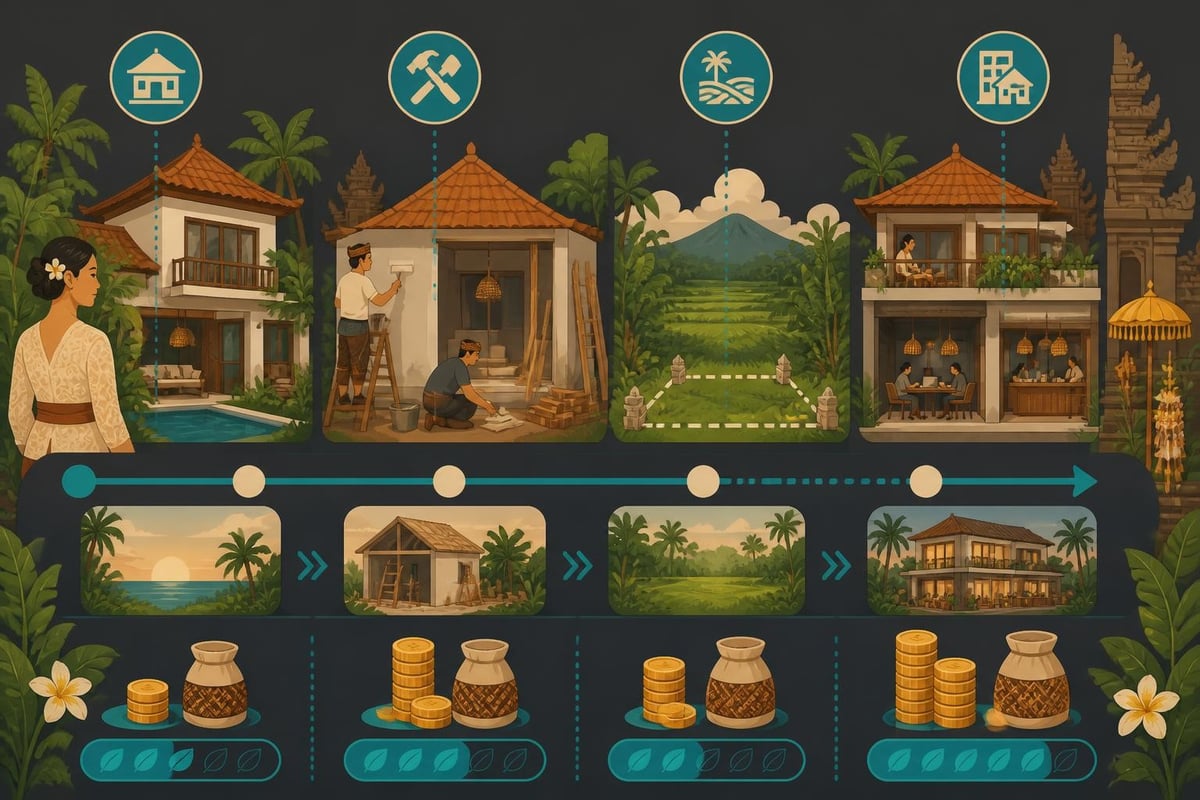
Financing and Transaction Process
Understanding the purchasing mechanics helps prepare investors for the steps involved in acquiring properties to buy in Bali. The process differs significantly from Western real estate transactions.
Financing Challenges
Foreign buyers typically cannot access Indonesian mortgages, requiring cash purchases or financing from their home countries. Some developers offer payment plans for off-plan purchases:
- Down payment: 20% to 30% at contract signing
- Progress payments: Tied to construction milestones
- Final payment: At completion and title transfer
Private lending from Indonesian sources is available but carries higher interest rates (8% to 12% annually) and shorter terms than Western mortgages. Most investors use cash purchases or home equity from properties in their origin countries.
Transaction Timeline
Typical property purchases follow this sequence:
- Property selection and negotiation (1-2 weeks)
- Letter of intent and deposit (1 week)
- Due diligence period (2-4 weeks)
- Legal review and contract preparation (1-2 weeks)
- Notary signing and payment (1 week)
- Title transfer registration (2-4 weeks)
Total timeline ranges from 8 to 14 weeks for straightforward transactions. Complications like unclear titles, zoning issues, or permit problems extend this significantly. The step-by-step purchasing process provides detailed guidance for each stage.
Transaction Costs
Beyond the purchase price, buyers should budget for additional expenses:
| Cost Category | Percentage of Purchase Price | Notes |
|---|---|---|
| Legal fees | 1-2% | Independent attorney recommended |
| Notary fees | 1% | Government-licensed notary required |
| Tax (BPHTB) | 5% | Land and building transfer tax |
| Agency commission | 3-5% | If using buyer's agent |
| Due diligence | $1,000-$3,000 | Surveys, title checks, inspections |
Total transaction costs typically reach 10% to 13% of the purchase price. These costs apply whether buying an existing property or purchasing land for development.
Property Management and Operations
Successfully operating properties to buy in Bali as rental investments requires either local presence or professional management services. The operational complexity varies by property type and target market.
Management Service Options
Professional property management companies handle day-to-day operations for absentee owners. Services typically include:
- Guest communication and booking management
- Check-in and check-out coordination
- Cleaning and laundry between guests
- Maintenance and repairs
- Bill payment and financial reporting
- Marketing and listing optimization
Management fees range from 15% to 25% of rental income for full-service arrangements. Higher-end properties command lower percentage fees but require more sophisticated marketing and guest services.
Regulatory Compliance
Rental properties must comply with Indonesian tourism regulations, including:
Required permits and licenses:
- Business license (NIB) for rental operations
- Tourism business registration (TDUP)
- Tax identification number (NPWP)
- Annual operational permits
Non-compliance risks fines, property closure, or deportation for foreign owners. The regulatory environment continues evolving, with stricter enforcement in tourist areas beginning in 2025 and intensifying through 2026.
Operational Efficiency
Maximizing returns requires optimizing occupancy rates while controlling costs. Successful operators focus on:
- Dynamic pricing adjusting rates based on demand
- Multi-channel distribution across booking platforms
- Guest experience generating positive reviews
- Preventive maintenance reducing emergency repairs
- Energy efficiency lowering utility costs
Properties to buy in Bali perform best when owners treat them as business investments requiring active management rather than passive assets. The difference between mediocre and excellent operations often determines whether properties generate positive returns or become financial burdens.
Risk Mitigation Strategies
Property investment in Indonesia carries unique risks that require specific mitigation approaches. Understanding and preparing for these challenges protects capital and improves long-term outcomes.
Legal Protection Measures
Working with qualified legal professionals provides essential protection when purchasing properties to buy in Bali. Key protective steps include:
- Independent legal counsel: Never rely solely on seller's attorney
- Title insurance: Available through international providers for high-value properties
- Escrow services: Protect funds until title transfer completes
- Detailed contracts: Clear terms for every aspect of the transaction
The additional cost of proper legal protection (1% to 2% of purchase price) represents cheap insurance against catastrophic losses.
Market Volatility Planning
Real estate markets experience cycles, and Bali is no exception. Conservative investors plan for:
- Cash reserves: 12 to 18 months of operating expenses
- Rental income buffers: Assume 70% occupancy, not 90%
- Maintenance budgets: 2% to 3% of property value annually
- Currency exposure: Hedging strategies for non-Indonesian investors
Properties to buy in Bali should be evaluated assuming lower occupancy and higher costs than best-case scenarios. Investments that only work under perfect conditions typically fail when markets normalize.
Exit Strategy Development
Every property purchase should include a clear exit strategy. Considerations include:
Liquidity timeline: Selling properties in Bali typically requires 6 to 12 months from listing to closing. Plan accordingly if you may need to access capital quickly.
Market conditions: Understand that buyer pools vary by price point. Properties over $1 million have substantially smaller buyer populations, extending sale timelines.
Lease obligations: Long-term tenants or rental bookings may complicate sales timing. Structure rental agreements allowing for sale scenarios.
Tax Implications and Reporting
Property ownership in Indonesia creates tax obligations that vary based on ownership structure, rental activity, and your tax residence status.
Indonesian Tax Obligations
Property owners face several tax categories:
- Land and building tax (PBB): 0.1% to 0.3% of assessed value annually
- Income tax on rentals: 10% of gross rental income (final tax)
- Capital gains tax: 2.5% of transaction value when selling
- VAT on new properties: 11% on purchase price (often included)
These rates apply to leasehold arrangements and PT PMA structures. Tax obligations are generally lower than many Western countries, but compliance is mandatory to avoid penalties or deportation risks.
International Tax Considerations
Foreign investors must also consider tax obligations in their home countries. Many nations tax worldwide income, requiring reporting of:
- Rental income from Indonesian properties
- Capital gains when selling properties
- Foreign bank account reporting (FBAR in the US)
- Controlled foreign corporation rules for PT PMA structures
Tax treaties between Indonesia and your home country may provide credits or exclusions preventing double taxation. Professional tax advice covering both jurisdictions is essential before purchasing properties to buy in Bali.
Navigating Bali's property market successfully requires understanding legal frameworks, conducting thorough due diligence, and selecting locations aligned with your investment objectives. The island offers genuine opportunities for capital appreciation and rental income when approached with proper preparation and realistic expectations. Livuma provides a secure, transparent marketplace for discovering properties for sale across Bali, connecting buyers with verified listings and ensuring legally compliant transactions through KYC verification and notary-approved contracts. Whether you're searching for investment properties or vacation homes, Livuma's comprehensive platform simplifies the discovery and acquisition process for Bali real estate.